481. Power of Weaknesses

Caleb • Lead Pastor
October 22, 2026

2 Minute Read
Continuing on last week's blog, I want to talk about another weakness. During my guest speaking engagement in Nashville, someone came up to thank me for the message and asked how I could be so precise and concise in my words and points. I'd never been asked this question in person, so I thought for a moment. I told her it is actually because of my weakness: I'm not gifted in speech, and English isn't my first language, so I have to write everything for my talk because I cannot wing it. And I don't have the Charisma or humorous presence some pastors do, so I need to be precise in my points to keep people engaged. But many people came to me during this retreat saying, "Pastor Caleb has a lot of bangers!" After almost failing OAC (Grade 13) English because of presentations, I found it delightful that God's power was most evident in my biggest weakness.
We dread our weaknesses because they don't seem to have immediate merit. Weakness is a weakness no matter how you decorate it. Especially without God, it is easy to despair over our weaknesses. We find it hard to imagine how our weakness could become something good. But if we submit it to God, he can use it to turn it into strength, or to make it look like strength. Because he uses the weak to shame the strong. (1 Cor 1:27) It is not that God doesn't use our strengths. But his strengths become much more evident through our weaknesses.
People find merit in embracing our weaknesses. But the Bible goes a bit further. We are not just to be open about our weaknesses; we are to "boast" about them. (2 Cor 12:9)
It doesn't mean putting all our weaknesses in CAPS on our resume boastfully. It means we believe God's greatest favour will land on our weaknesses, not our strengths, and accomplish what we never thought possible.
You might not have a good family background. It could be your childhood trauma. It could be your personality or tendency. It could be your not-so-dramatic faith life. If we embrace it as part of our identity and believe in God's extra favour on it, our weaknesses don't become a blockage but a building block for God's power.

Up Next
From this Author: Caleb
November 5, 2026 • 3 Minute Read
483. Four Years
It was Halloween last week. Because my mom went down with a stroke on the day of Halloween, it also marked the 4th year of her post-stroke recovery. Soon after the stroke and while she was still unconscious, I strongly sensed that I received a promise from God while doing daily QT that "This sickness will not end in death but is for the glory of God"(John 11:4). It was the passage of Lazarus's death. Amazingly, it was also the passage I was scheduled to preach on the coming Sunday. Despite the doctor's prediction that she would never regain consciousness, she miraculously woke up while her mental capacity was almost fully intact. She recognized us, remembered all our names, and answered our questions. Later, we also confirmed she could speak (though faintly). As joyful as we were, after holding onto God's promise for 4 years, we are experiencing the challenge of "waiting" for her full recovery. Faith is waiting. That is why the father of our faith is "Abraham", whose only accomplishment we know is waiting for 25 years for his miracle child. Even though many heroes of faith accomplished far more dramatic feats for God, God still wants Abraham to be our role model in faith. I didn't understand this, but after 4 years of waiting, I finally get it. Waiting seems passive and easy, but anyone who has waited long enough knows how difficult it is. It requires patience, endurance, trust and resolve in the face of contradicting realities. That's where my family is. As our caregiver couldn't continue and while we search for another one, I decided to fill in for the duty of providing basic care for my mom. I enjoy seeing her enjoy my more frequent visits. But at the same time, the more I visit, the more I see the reality of my mom's condition. Every time I see that she still can't move her right leg, which has become so thin and bony, I cannot logically picture how it could be strengthened again, and doubt begins to cloud my mind. However, God seems to continue to encourage me and my family through this time. My sister messaged me not long ago that a church member she knows died of a stroke very suddenly. After seeing that her family couldn't even have a chance to say a proper farewell, my sister realized how this difficult waiting season is actually a blessing for our family. It gave us 4 years of seeing our mom and building memories even after the stroke. The last 4 years were not just a waiting room, but 4 years of enjoying the miracle. These days, I am strengthening myself by reflecting on how Lazarus's story unfolded. After his death, Jesus intentionally waited 4 days before visiting his tomb. When everyone felt it was done, Jesus came and crashed the funeral. I tell myself that maybe God is purposely waiting 4 years before he does something miraculous again. So, as a small act of faith, every time I visit her, I massage her bony legs and prophesy over them that "dry bones will come to life". (Ezekiel 37:4-6)
October 29, 2026 • 3 Minute Read
482. Purity Can Be Toxic
Drinking absolutely pure water can kill us. All the water we normally drink, from taps, bottles, or the garden hose, contains impurities that affect a property of water called tonicity. This is a solution's ability to draw or repel water from adjacent solutions when separated by a membrane. Hypertonic solutions gain water, while hypotonic solutions lose water. Absolutely pure water, with no impurities at all, is the most hypotonic solution. So, if we drink enough of it, our cells will start absorbing water. This disturbs the balance of electrolytes in our body. This is most seriously a problem in the brain, where water poisoning can lead to brain damage, coma and even death. If truth is like water, 100% truth will kill us. Seeking purity in all our communication is actually toxic to our relationships. Expecting laser clarity of the heart's intention to be communicated all the time is not only infeasible but also only worsens a relationship. If we spoke 100% of our intentions and what is in our hearts to the people around us every day, they would probably want to be alone for the rest of their lives. Why? Because we cannot handle 100% truth about ourselves and what people think. Though some people claim they want truth and nothing but the truth, most of us want some cushion to minimize the impact of hard truths in communication. So we need to accept that we can never be 100% clear and pure in all our communication. It is said that there are 4 different levels of communication that happen in every conversation: What I think I said What I actually said What I think others heard What others actually heard Our words cannot contain and convey all the information by design. That is why tone of voice, facial expression, and gestures fill in the gaps in our understanding. So, in every communication, we must add and allow a small bit of nuance, consideration, and intentional unclarity so that a “reasonable” amount of truth can sustain “reasonable” understanding with each other. We won't see the full picture of truth until we see Jesus as he really is (2 Cor 3:18). Then we will all know the truth in full, and it will make us live forever, instead of killing us. Only pure water that does not kill is Jesus himself, the living water. (John 4:13-14) It is because through Jesus came not just truth, but "grace" and truth. (John 1:17) Grace allows truth to be true without being cruel.
October 22, 2026 • 2 Minute Read
481. Power of Weaknesses
Continuing on last week's blog, I want to talk about another weakness. During my guest speaking engagement in Nashville, someone came up to thank me for the message and asked how I could be so precise and concise in my words and points. I'd never been asked this question in person, so I thought for a moment. I told her it is actually because of my weakness: I'm not gifted in speech, and English isn't my first language, so I have to write everything for my talk because I cannot wing it. And I don't have the Charisma or humorous presence some pastors do, so I need to be precise in my points to keep people engaged. But many people came to me during this retreat saying, "Pastor Caleb has a lot of bangers!" After almost failing OAC (Grade 13) English because of presentations, I found it delightful that God's power was most evident in my biggest weakness. We dread our weaknesses because they don't seem to have immediate merit. Weakness is a weakness no matter how you decorate it. Especially without God, it is easy to despair over our weaknesses. We find it hard to imagine how our weakness could become something good. But if we submit it to God, he can use it to turn it into strength, or to make it look like strength. Because he uses the weak to shame the strong. (1 Cor 1:27) It is not that God doesn't use our strengths. But his strengths become much more evident through our weaknesses. People find merit in embracing our weaknesses. But the Bible goes a bit further. We are not just to be open about our weaknesses; we are to "boast" about them. (2 Cor 12:9) It doesn't mean putting all our weaknesses in CAPS on our resume boastfully. It means we believe God's greatest favour will land on our weaknesses, not our strengths, and accomplish what we never thought possible. You might not have a good family background. It could be your childhood trauma. It could be your personality or tendency. It could be your not-so-dramatic faith life. If we embrace it as part of our identity and believe in God's extra favour on it, our weaknesses don't become a blockage but a building block for God's power.
October 15, 2026 • 3 Minute Read
480. Benefit of Weaknesses
I came back last Sunday after preaching at Unity Baptist Church in Nashville. I usually preach on the theme "Abundant Life", and it has four sessions: Happiness, Identity, Purpose and Future. Interestingly, after the second session, when I preach about "Identity," which is based on our weaknesses, not strengths, people often come to me to share how they connected with my message and my weaknesses. In the session, I shared about my weaknesses, mainly my introverted personality and my speech. It seems to confirm what one leader said: "People will admire you for your strengths but connect with your weaknesses." We think of weaknesses as defects. But if we embrace them as "part" of our identity, not only do we feel authentic, but God also uses that to encourage people and connect with them. So, at one point, I began to be intentionally open about what I see as my weakness. What I shared recently was about my desire for good things (namely Apple products and Lululemon, which some people consider excessive spending), mainly because they bring "me" great joy while using them. Thankfully, many of my members appreciate that I share it openly. (I think) I used to try to be more frugal. I thought, "Why am I not as frugal as other pastors who seem to get by with very little?" I budget, and I try to manage our household finances based on biblical and sound financial principles. But I struggle to find satisfaction in using things I don't love. Some people are happy with any smartphone or computer, as long as it works. Not me. Some people are very happy with cheap, functional clothes. Not me. (By the way, not all my clothes are Lululemon!) I genuinely struggled, but I eventually embraced this as part of me. Because I sensed that God doesn't judge me for it, and He seems to joyfully satisfy me with the good things I desire, which matches what He promises. (Psalms 103:5) It doesn't mean that I now mindlessly spend money on them, but I stopped condemning myself for not being as frugal as others. Thankfully, the Bible emphasizes more about "generosity" than "frugality", which is what I try to focus on instead. In Exodus, there were two miracles in God’s provision. The first miracle was "Manna", bread God sent from heaven. The second miracle was that those who gathered a lot (because of their great appetite) had no leftovers, and those who gathered a little (those who don't eat a lot) had no deficit. (Exo 16:16-18) They all amounted to the same amount God prescribed for their collection: one "Omer" (about 2.2 L). God can satisfy both those who need a lot and those who don't. We think our weaknesses will drive away people. But they actually attract them. Only our weaknesses that are "found out" do. That said, don't compare your strength with someone else's weakness. That leads to pride. What matters is whether we receive whatever amount of God's provision with "contentment", not "comparison".
October 8, 2026 • 4 Minute Read
479. Only This Far
This post is a translation of Pastor Lee's post from SBC's website, written on 9.27. 2026. We use certain words and ways of thinking without much thought, yet they quietly diminish the potential of our spiritual lives. One of them, I believe, is the expression many Koreans often use: ‘Only this far.’ (여기까지) Some people say that this phrase accurately describes the faith of many Korean Christians today. For example, when they are asked to serve in a ministry, they set a limit for themselves and say, ‘This is as far as I can go.’ Even those who are serving as Shepherds and Shepherd’s wives sometimes draw an invisible line in their hearts and decide, ‘This is as much as I’m willing to do.’ As I heard people describe this tendency, I could not help but ask myself, “Are we any different?” As I reflected, I realized how such thinking can hinder not only the capacity God has given us but also the work He desires to accomplish through us. One lesson I have learned through ministry is that God has given us far greater capacity than we realize. Human capacity can keep growing as long as we are willing to stretch it. Someone who struggles to care for one person today may continue responding to the challenges God places before them and eventually find themselves caring for two hundred people. Mother Teresa is a good example. When my wife lived in Korea, she would become completely exhausted after preparing a meal for ten guests. Sometimes she would even get sick afterward. But while serving in a singles house church, there were times when she prepared meals for as many as forty people, attended early morning prayer the next day, and later, when our third worship service first began, she regularly helped feed 120 young adults after worship. Today, because of her severe vision loss, she can no longer do those things, but she has become someone who is no longer intimidated by large numbers of guests. God expanded her capacity far beyond what she once thought possible. The same principle applies to intellectual abilities such as memory, learning, and understanding. Human capacity grows as it is stretched. We can be used far beyond what we believe our limits are. In fact, I believe this is part of what Jesus intended to teach through the Parable of the Talents. The servant who buried what he was entrusted with and returned it unchanged was called a wicked and lazy servant. In the same way, if we keep standing before opportunities for ministry and saying, “Only this far,” drawing our own boundaries, I believe we will one day hear a similar rebuke from our Lord. This mindset not only limits our own capacity; it also limits what God can do in and through us. Peter was the only disciple who stepped out of the boat. Even if he walked on water for only a few steps, he experienced something the others never did. Had he stayed in the boat, he would not have experienced a miracle. When we step beyond our comfort zone and take a risk in faith, God works, and we get to witness His work firsthand. When circumstances seem impossible, and we choose to tithe anyway, we discover God’s surprising provision. When life seems too busy and overwhelming to become a Shepherd, yet we commit ourselves to that ministry, we encounter God’s work in our lives. When we are sick, the natural response is to visit a doctor, but sometimes, when we step forward and ask for prayer, we experience God’s healing power in a fresh way. If we act only according to what seems reasonable and safe, we leave little room for God to demonstrate His power. It is when we step beyond what appears sensible and take a step of faith that we often experience God at work. But if we keep saying, “Only this far,” we will inevitably place limits on what God desires to do. Therefore, whenever the words “Only this far” begin to come out of your mouth, stop yourself. Instead, say, “If God desires it, I am willing to go the extra mile.” As you do, may God expand your capacity and enlarge your territory, and may you experience His wonderful work in your life.
October 2, 2026 • 3 Minute Read
478. Under Authority
These days, it's easy to find people who don't want to work for anyone. They want to be their own boss because they hate being told what to do. It is natural for humans to want independence, but if we are not careful, we might end up with no authority above us. It happens a lot as we get older, but it can also happen to young people once they reach adulthood because they now have a choice. But having no authority above us is not only impossible but dangerous. I heard someone say the most dangerous person is someone with no one above him. Some people might reach the top of the corporate ladder and have no official boss. But being under authority isn't just about having someone to report to; it's about seeking their counsel. That is why wise CEOs seek counsel and look for mentors with more experience than they do. Many people like the idea of humility but hate being under authority. But the best way to keep ourselves from becoming proud is to submit to someone ahead of us. I have Pastor Kwack as my authority, and I submit under his leadership. I submit to a leadership team on big ministry decisions (though we also submit to each other) and seek their counsel. I have many pastors in the house church network who have no official title above me, but I also submit to their authority because of the ministry journey they took ahead of me. I ask them questions before launching something big. The most tangible way to measure our humility is to ask this simple question: Do I have leaders whose advice I seek before making a big decision? If we don't, we might be spiritually in a dangerous place. I’m not talking about leaders or influencers we follow on Instagram, authors of books we read, or podcast hosts we listen to. I’m talking about real people around us who are ahead of us (other than our parents). When no one is involved in the important decisions of our lives, we might have people with titles of leaders, but we are not under real leadership. Under the right authority, we will always recognize what we lack and seek help. If we have one, we will appreciate feedback and be thankful for it. If we don’t, we will be offended when truth is spoken over us, because we won't see the need for it. We always have to be under someone. Some might say, “I’m under God’s authority!" That is a clear example of loophole-Christianity. Even the Son of God submitted to the Father God. It's a spiritual-sounding way of saying they don't like being under authority and want to stay proud.
September 24, 2026 • 3 Minute Read
477. How I Use AI
During the HC pastors' conference, as we ate breakfast, one of the pastors brought up the issue of "AI-generated worship songs" playing in some churches. So the discussion began, focused on "how much is too much." It was an interesting but also thought-provoking conversation. AI is the hottest topic wherever we go, and no one can doubt how prevalent it is these days. Even many seniors who are not tech-savvy regularly use and rely on AI. Many church members also use AI to get faith-related advice. So it is not hard to guess that many people are also curious about how pastors use AI and "how much." I can't speak for other pastors, so I will be transparent about how I use it. The first time I used AI extensively wasn't for my work, but for travel planning during my Japan Trip in 2024. I realized how much time it saved, as it gave me popular routes instantly without me having to compare different reviews and social media content. Then I thought about how I could use it more in my ministry. I tested it by asking it to give me exegesis of a certain passage to see if it says anything weird, but surprisingly, its output was pretty sound. So I started incorporating it into my sermon research for more modern implications. But AI is "one" of the resources I use. I usually study 3 commentaries, so it became my 4th resource. These days, I am trying to use it more to search my own work. I have my past sermons, blog posts, and new ideas all in a deposit of text files. The amount is quite large, and searching them manually has limitations. Now, I can ask AI to search my past work for a specific theme or words and use it to build a starting block for a related talk or message (usually for guest preaching). I find it useful because it can dig through my own work and synthesize a new creative direction. AI is also very handy for grammar checks. As English is not my first language, I try to make sure my main points are grammatically error-free. Sometimes they can be too wordy, unclear or potentially misleading, so I ask AI for correct expressions. But I do not ask AI to generate my main point. Whether AI is a net positive is hotly debated, even among experts. I am also in the middle of researching and experimenting. Meanwhile, what I can do now, at least, is maintain my "agency", not allowing it to "do" my work but to "assist" me. One thing I am sure of is that preserving our own agency will remain the greatest challenge when it comes to AI usage.
September 10, 2026 • 3 Minute Read
475. My Family Update
It's been almost a month since I wrote my last blog post, so I'd like to share some updates about my family. We visited my aunt and uncle in Indonesia last month. They got to see my kids for the first time, and we spent a good amount of time together. They've been serving as missionaries for a long time, but I heard their ministry stories for the first time. Hearing their ministry fruit, hurt, and challenges helped me to get to know them better and pray more specifically. God gave them favour through a businessman who owns the mountain, who helped them build a nice house on top of a mountain. So our stay was very comfortable, and we enjoyed the nice view. Our time in Bali was great. August is hurricane season in Mexico, but it is the driest season in Bali, so we enjoyed continuous sunlight throughout our stay. Our kids liked Indonesian food (though limited to a few options), so we had a good time eating and resting. On our way back home, we had a 24-hour layover in Taipei (Taiwan). So we ventured out to stroll around Taipei 101, which is famously known for pro climber Alex Honnold climbing it without any safety gear. It was very urban and felt like we were in Korea. A bunch of us caught some colds during this time. After arriving home, we had a rough week battling jet lag and cold symptoms. But thankfully we are pretty much recovered now. We bought a used 2011 Honda Pilot in 2014. For the last 12 years, it served our family well, and we also used it extensively for ministry. (It was a non-official church van) But it had been acting up lately, and all the tires (including snow tires) were due for a change. Given its age and upcoming large expenses, we concluded it was time for a new car. We still need a 7-seater and cargo space for ministry, so we decided to buy another Pilot. We signed the deal on Wednesday (I'm writing this post on Thursday) and will pick it up on Saturday. The most exciting part for me is finally having Apple CarPlay and a power tailgate. Every time I go on a family vacation, I'm reminded that family is a wonderful gift from God. Just being present with my family gave me a great sense of joy and fulfillment. I reflected that this is why God wants to create a spiritual "family" through his church, because it is his heart: To dwell among his people forever. (Rev 21:3)
August 14, 2026 • 3 Minute Read
474. Slowly but Surely
There are many things in my ministry that felt like a distant dream years ago, but are now a reality. One of them is having multiple people in a preaching rotation besides me. Though I wasn't actively trying to make it happen, I now recognize that God has been "slowly but surely" raising up communicators in the church. First it was pastor Anthony, and then shepherds (and spouses). Years ago, one of my mentors who used to be a church consultant visited our church to speak. After the service, he gave me a couple of pieces of good feedback, and one of them was the need to raise up multiple communicators in the church. Back then, I was busy improving my own preaching, so that didn't stick with me. But I did agree with his point that the church needs multiple communicators, so even if something happens to me on a given Sunday, someone else can preach. It didn't resonate with me then, but now I see its beauty and necessity. We have already seen its benefits. During my sabbatical last year, in addition to Pastor Anthony, shepherds (and spouses) rotated in preaching during my two-month absence. I heard great feedback after I came back. So I have asked our shepherds to volunteer if they want to do it again this year, on the Sundays when I am not present. A few shepherds signed up to preach, and they will speak for the next two Sundays. Though I remain as the main communicator, I love that I get to empower other communicators. I feel so blessed that not only do we have a second strong communicator in Pastor Anthony, but also many shepherds who can be part of the preaching rotation. I shared before that shepherds' preaching will not be exegetical but testimonial. Pastors have enough time to study the text and consult many resources to make it the main focus, but lay leaders don't have enough time to do so. They will choose a theme they feel convicted about during this season and use the text as supporting evidence to make their point. And as they must rely on their real-life examples to make their point, their preaching will be relatable and could be more impactful. As shepherds function as lay-pastors for their house churches, I believe they already live a very pastoral life and have what it takes to speak into our lives.
July 17, 2026 • 2 Minute Read
473. God Did It
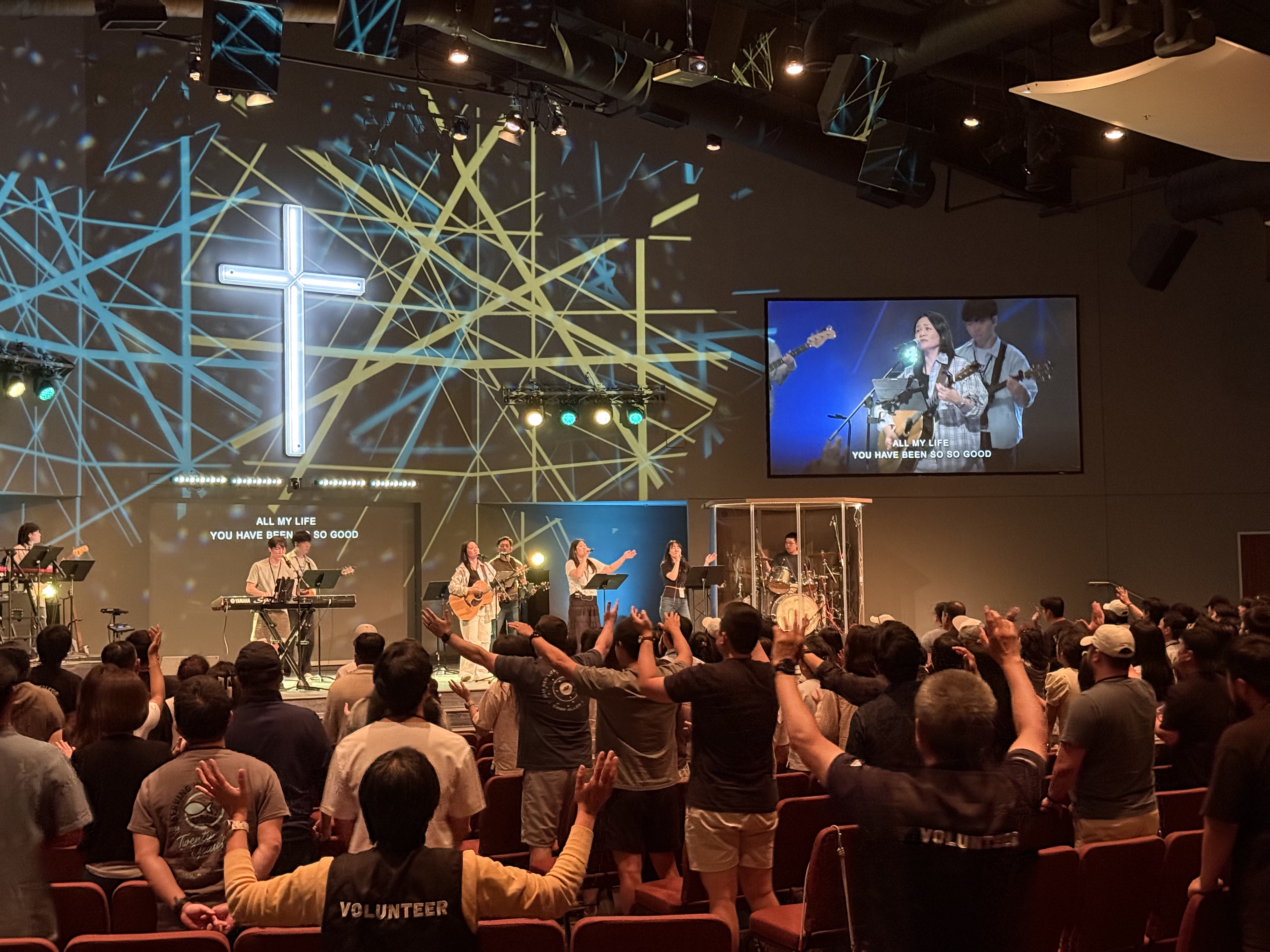
Praise team and I came back safely last Sunday, after serving in the Shepherd Conference and NLF Sunday service. During the conference, I heard so much positive feedback from the participants, including pastors. One pastor told me this: "Your team not just plays songs, but leads worship." I believe that is the utmost compliment a praise team could hear, and I was so proud of our team. During one morning session, the main speaker said he rarely cries in response to praise, but he did. (Funny thing is, I cried during that session in the middle of a fast song!) There was an undeniable presence of God during each praise session. My sermon at the NLF Sunday service was well-received as well. As I was preparing for the message, I prayed that I would not preach to impress but to benefit. After the service, many came to me personally to share how the message encouraged them, so I was glad they found it beneficial. All our shepherds and spouses who attended the conference shared that it was really helpful to them. I was very happy to see them connecting, interacting with shepherds from other churches, building wonderful friendships within the universal Church and learning from each other. Leading up to the conference, I wasn't sure what this would lead to, but after the conference, it was clear that God would use our church more to bless other churches in the HC ministry network. I saw it as an answered prayer to the prayer we make every week to become a resource church. Though we might be small, I was reminded that God used a shepherd boy to strike down a giant. He can use 5 loaves and 2 fish to feed the thousands. As we were about to leave NLF, a verse on the wall caught my eye. It said, "The one who calls you is faithful, and he will do it." (1 Th 5:24 NIV) I felt like this wonderfully summed up our trip: God, who called us, enabled us. Jesus said, "From everyone who has been given much, much will be required". I didn't know how much we had, but through this trip, I realized how much God has given us. If God is increasing our capacity to serve, we just adjust accordingly, trusting that God will give us the ability and resources to do so.
July 3, 2026 • 3 Minute Read
472. God Who Calls also Enables
Many of you already know, but our praise team is invited to lead praise time at the Shepherd's Conference next week. It is an annual conference that happens for shepherds and spouses in North America, and about 200 people attend. This year, all our shepherds and spouses are attending as well. Though the conference starts on Thursday, the praise team will fly out with me early on Tuesday to practice. They were also asked to lead praise time during Sunday service at NLF (New Life Fellowship), the host church, so they will return on Sunday evening. (I will also be preaching there on Sunday) Last year, when Pastor Eric came to speak at our members' retreat, he noticed something about our praise team. After the first praise session, he openly invited our team in the middle of his first sermon at the retreat. We were all surprised, and some thought he was making a joke. But when the official invitation came, we knew he was serious. I believe there is a special favour of God on our praise team, and his favor is always for the greater good of His people. So, I think God has called our praise team not to showcase their talent but to bless the greater body of Christ, particularly within the house church ministry network. Also, we believe it is our privilege to serve back the church that hosts HC lay leader seminar, pastor's seminar, and Shepherd conference every year. Just as we were blessed through their service, I believe God is giving us the opportunity to show appreciation through this. Our praise team has been practicing multiple times a week for the last 6 months. Even with such preparation, it is sometimes easy to doubt ourselves: "Are we good enough?" This is the type of doubt I wrestle with when I am invited to guest speak as well. But one thing I have learned over the years is this: **God who calls also enables.** God wants our success more than anyone else. He never calls us to fail. He sets us up to succeed. And when he gives us an assignment, he also gives us the ability to fulfill it. I am confident that this trip will be a great blessing not only to the participants but also to our praise team. Please pray for safe travel for the praise team and all who are attending.
June 26, 2026 • 4 Minute Read
471. My Testimony - Pastor Mitchell Perez
God's love found me at 16 years old while in my bedroom. I cried out to God to save me and use me. I repented of my hypocritical life. One way with my peers at school. Another way with my peers at church. Soon after, I made it my aim to live for God's Kingdom. I was consumed with letting Him do a great work through me. So I evangelized peers. Taught Bible studies. Served my church. My life was marked with passion. Boldness. Risk-taking. I would go on to Bible College and become a youth pastor at a large church at the age of 20 years old. But what began to happen beneath-the-surface was a brewing problem. See God, in His grace, brought fruit to many of these endeavors. People were getting baptized and growing under my leadership. Ministries grew by multiple metrics. I received much affirmation from leaders. But I didn't just receive it, I reveled in it. I'm not even sure I was aware of this at the time. Over time, I began to judge fellow Christians who struggled with doubt or those who didn't have the "passion" like me. I rebuked fellow Pastors that weren't as "biblical" or who weren't willing to sacrifice and work like me. I became the "older brother" in the Parable. But I was blind to see this. So then... God because He really really loves me... began to do a great work in me. He gave me the gift of sending me to plant a church that didn't result in explosive numerical growth like I wanted. If it had grown like I wanted - perhaps I would be yet another pastor scandal. Another leader that didn't have the character to handle the weight of such a ministry. Along with this gift - a Christian leader I looked up to, whom I longed to be affirmed by, crushed me with his words: "You're an unfaithful Pastor and if the Holy Spirit was truly anointing your ministry there would be fruit - your church hasn't even grown passed 30 people..." To be clear - He was wrong to say these words and they certainly weren't based in biblical teaching. But His words - sinful as they were - became a gift from God. In my brokenness, I believed these words from this leader. My shattered heart turned to God with anger. I considered leaving Christianity altogether. I willfully opened the door to pornography as a way to spite God. Though my actions were sinful. It revealed something profoundly important: "Mitchell, you're not as strong of a Christian as you thought were..." My God loved me so much, He broke me. And this was His great work in me. Bible scholars call this "sanctification". The lifelong process of becoming more like Jesus Because - as it turns out - God wants to reach the lost in the world. But He also wants to reach the "lost" in His children's hearts. We have a great mission for Jesus - Matthew 28 But the Spirit has a great mission for us - Romans 8 The Spirit wants to conform my character to Christ... I'm 38 years old now. And I'm so grateful for His great work through me. It's a privilege to be a pastor. A high honor. But I'm now so so so grateful for His great work in me. I've come to see that spiritual maturity is not: Learning more Bible Doing more good works Accumulating Church titles Spiritual maturity is when more and more of my pride is broken and I become increasingly controlled and content in the Holy Spirit. I hope my testimony blessed you. Thanks for reading.